Most people in Barbados call someone, explain the problem, and hope the price is fair.
The step-by-step guide is the public FAQ, with the buttons the app actually shows. This post is the essay. The FAQ is the manual.
Nexus starts in a narrower place, what we call a service call. A booked visit with a displayed price and a written scope, before anyone arrives. If the visit uncovers bigger work, that is a quote: a second agreement, with its own slot and its own payment.
A Nexus service call
- 01 Pick the offering
- 02 Choose a provider
- 03 Scope and time
- 04 Pay through Nexus
- 05 The visit
- 06 Done or a quote
Why We Built It This Way
Home services usually run on loose, spoken deals.
The customer learns what the visit includes after someone is already in the house. The tradesperson learns whether the job is simple or complicated on the same visit. Both sides fill the gaps with hope, then deal with the fallout when the job involves a larger scope.
A service call is our answer to that. It is the smallest honest product a provider can offer: someone comes at a reserved time, does what the offering says, and is paid for that visit through the platform.
The service call is for the jobs that already have a known shape like a leak, a dead outlet, an AC unit that has stopped cooling. Custom builds and multi-week renovations wait on a quote once someone has seen the work.
The driveway is also a bad place to negotiate the rest. You are already late. The tools are out. Saying no feels rude. Extra work waits on a written quote, on your phone, after the first visit is done.
What You Get
Before anyone arrives, both sides have the same three answers:
- What this visit includes, and the work that sits outside that list
- What this visit costs if the job matches that scope
- When someone is coming in a specific time window: 8–11 a.m., 11 a.m.–2 p.m., or 2–5 p.m.
Customers buy a scoped visit. Extra work they have yet to see stays optional until they approve a quote.
Providers get a funded, scoped job. They price the visit they accepted. Extra labour starts after the customer says yes.
Payments sit with the platform until the job is completed through the normal path. That protects both sides when the visit goes as planned, and when the visit uncovers more work.
App screenshots below are from the catalog. Any prices you see are examples. The number that matters is the one attached to the scope you accept when you book.
How the Visit Is Booked
1. Pick the offering first
You start from the problem like a blocked drain, a breaker that will not reset, an AC that is blowing warm and pick the standardised service that matches. You pick the job first, then the person.
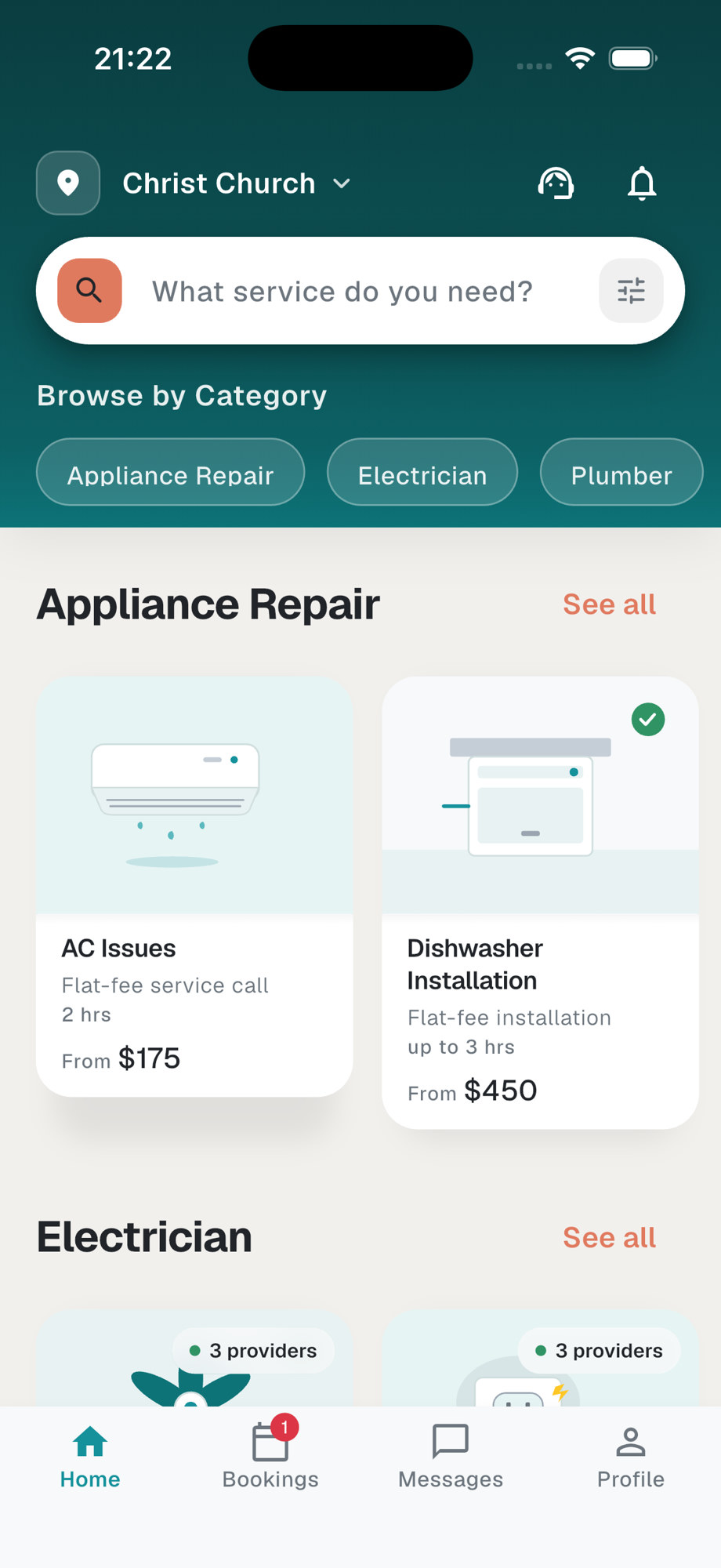
2. Choose a verified provider
You compare providers for that offering. The catalog stays the product; the person is who you hire to do it.
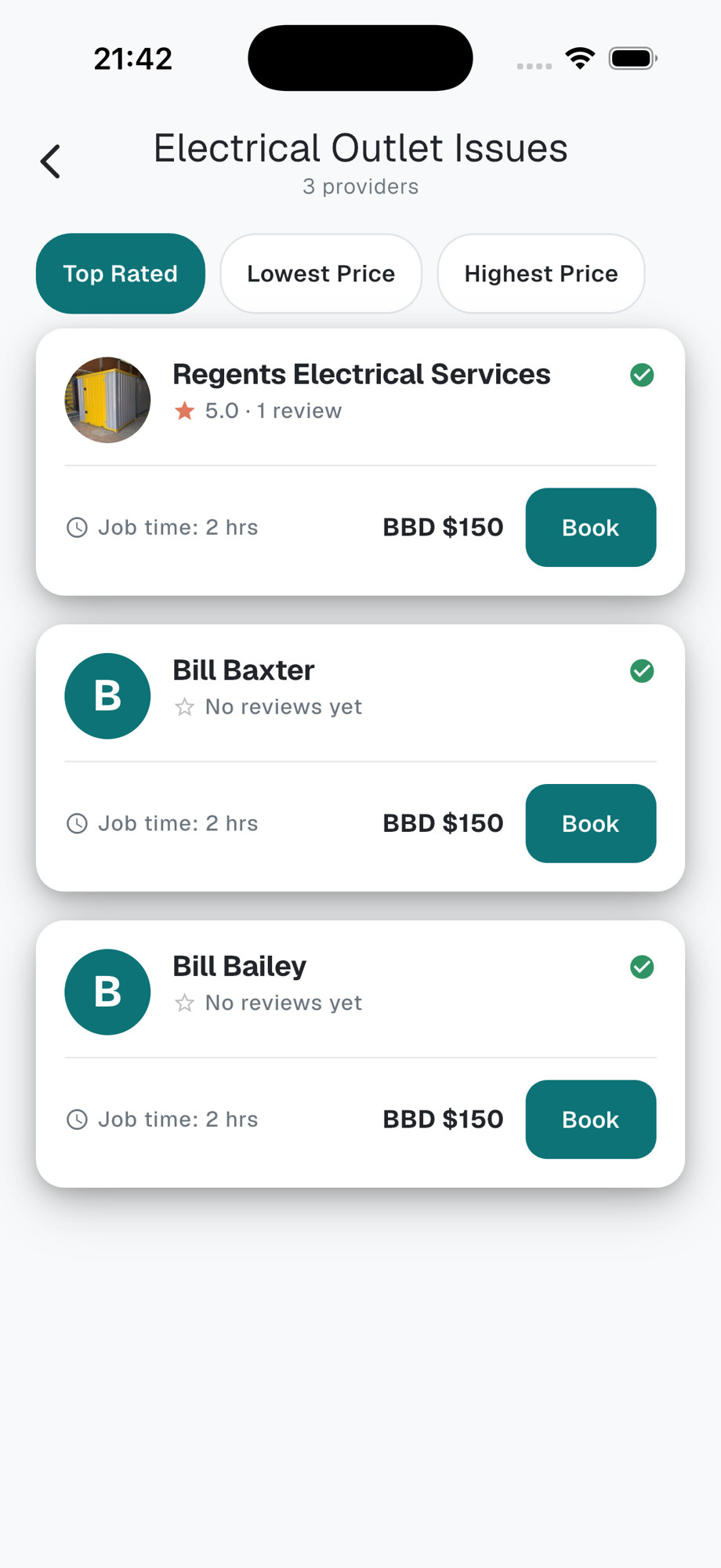
3. See what’s included and pick a time
After you pick a provider, the booking screen shows the scope and the displayed price for that visit. Generally our service calls include a set amount of time, general maintenance, and a goal to fix the issue if it is a simple one. If the job matches this scope, you pay this price. If the pro finds something else, they send a separate quote. You see the extra cost and approve it before they do the work or buy the part.
Then you choose a date and a window: 8–11 a.m., 11 a.m.–2 p.m., or 2–5 p.m. The provider accepts that slot or declines it. You get a reserved window.
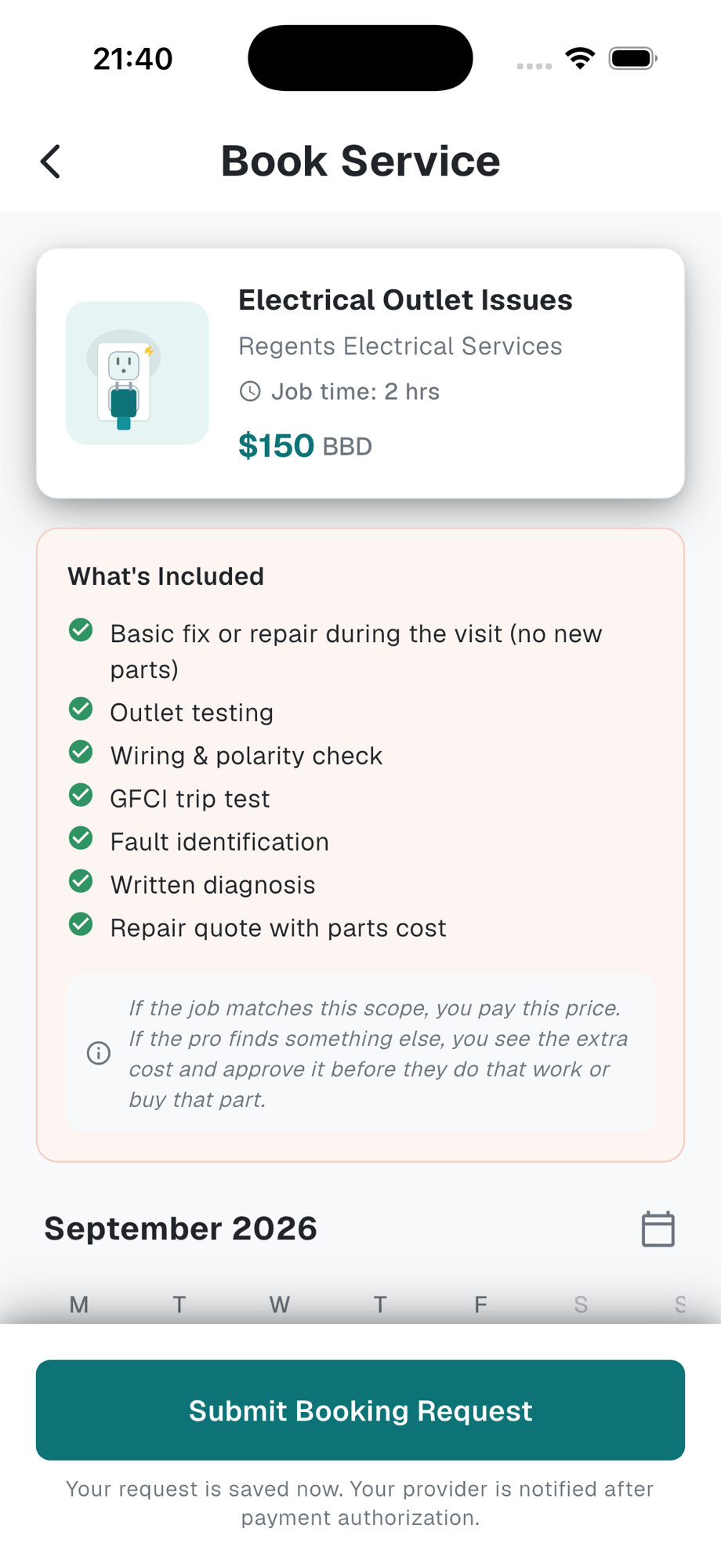
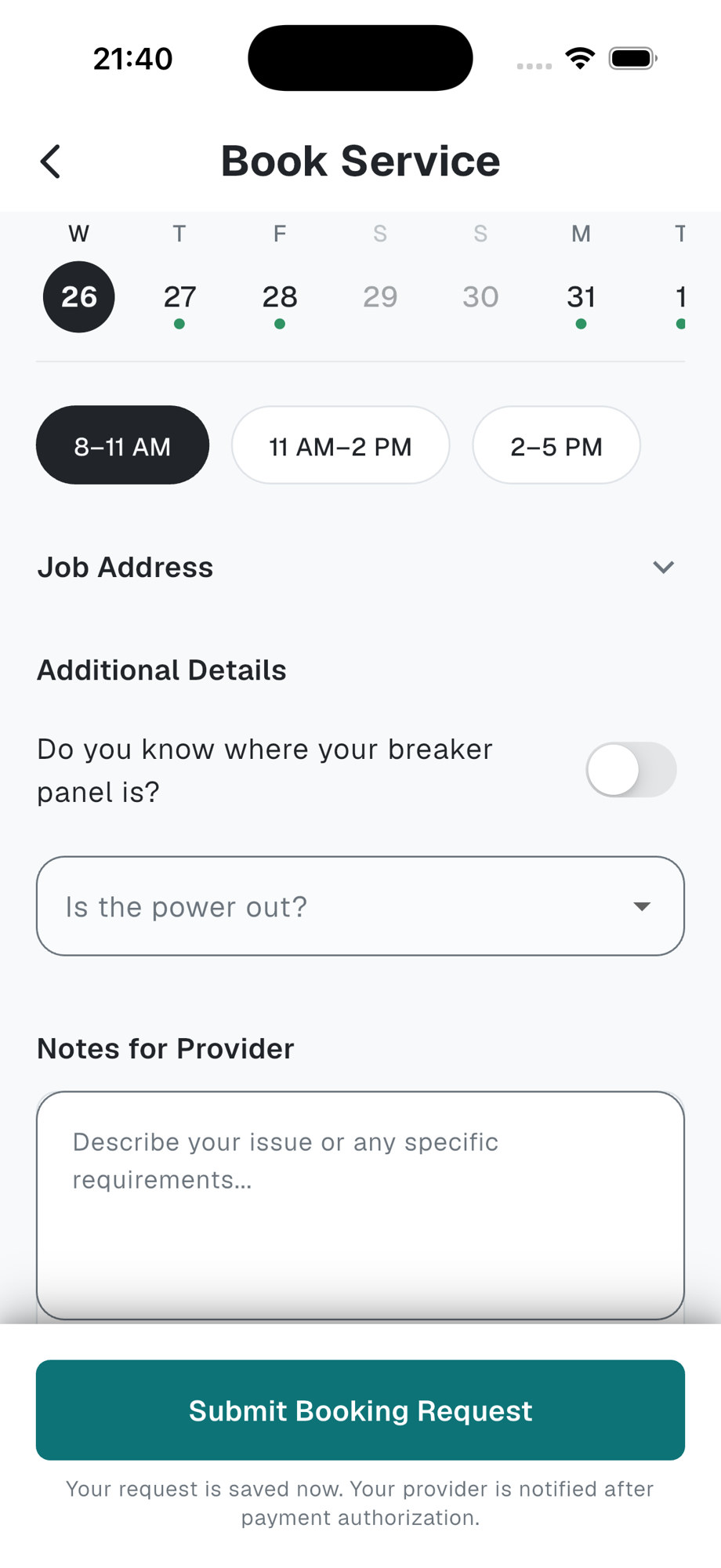
The same rule, written out at length, is in the scoped price.
4. Pay through Nexus
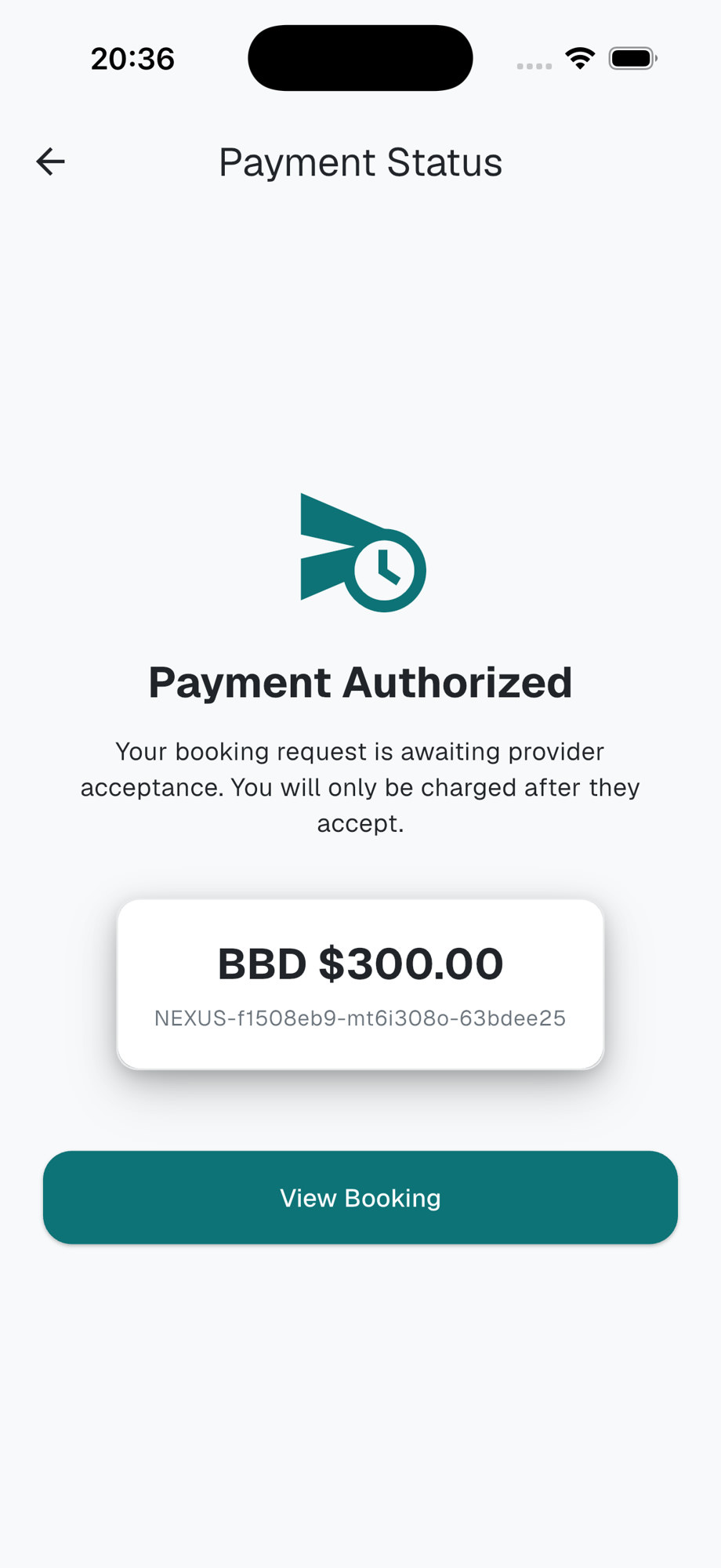
Payment is authorised when you book and held by the platform. Card details stay on the hosted checkout page. The provider is paid through Nexus. You are charged through Nexus.
5. The visit happens
The provider does the booked scope. If it is a simple fix, they finish it. If they find deeper work like a failed heater or a part that sits outside the offering, they provide a quote for it.
When They Find More Work
Sometimes the service call is the complete job. The drain clears. The outlet holds.
Sometimes the visit is how you find out the real job. The heater has failed. The leak is in the slab. The part is still at the supplier. That is what a scoped visit is for: do what was booked, then say plainly what else is wrong.
Extra work identified, then a quote
When the provider finishes the visit they classify the outcome. One of those outcomes is that more work was identified. That flag only means they saw something else. A booking, a price, and permission to start arrive with the quote.
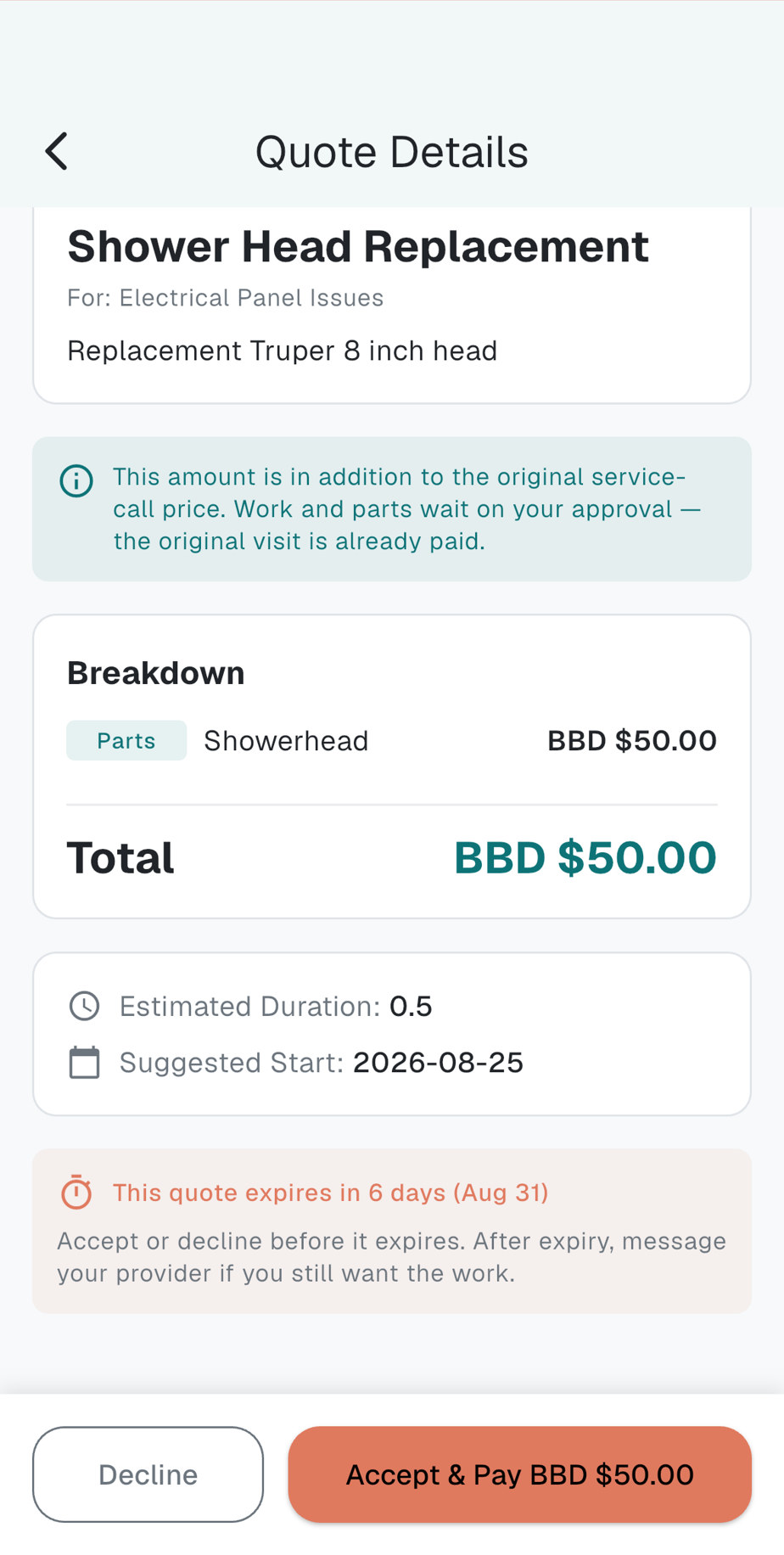
A quote is the priced offer that comes after. Line items, a total, and a chance for the customer to accept or decline. Until that happens, the extra work stays an observation.

This distinction matters. On WhatsApp, “I’ll have to come back” can mean a free swing-by, a vague extra charge, or a new job that never gets a number. On Nexus those are separate words, with separate steps.
How a quote becomes a booking
The provider writes the quote against the original service call: the extra labour, the parts, the work that sat outside the first scope.
The customer sees it in the app. The amount is in addition to the original service-call price. The first visit stays paid. You are being asked whether you want the next one.
If you decline, the original visit still stands. You already paid for that scope.
If you accept, you pick a new date and time slot. Nexus creates a follow-up booking, copies the location from the first visit, and takes payment the same way as any other booking. It occupies the provider’s calendar like a first visit. It is a new job, at a new fee.
Same protections apply: payment through the platform, completion evidence, a 24-hour window to raise a problem.
Why both sides should want this
For the customer, the decision moves back onto your phone. You can see the extra cost. You can decline it. You can accept it and pick a time you can actually keep. The service call stays closed on its own scope. The repair, if you want it, is a second agreement.
For the provider: the larger job waits on a yes. Extra work starts funded, before you buy the part or block the next morning. If they decline, you still got paid for the call you actually did.
Most jobs still start with the standardised service call. The ones that need more continue on a quote the customer has seen.
We Are Building the Provider Network First
Nexus is building the provider network first, starting with plumbers, electricians and air conditioning technicians across Barbados.
If you want a visit that can turn into a clear next step, join the customer list. If you do this work for a living, join the provider waitlist. Early providers get priority placement.
Deeper on the price rule: the price you see is the scope. The illustrated how-to for both audiences: How Nexus works.