The lamp on the nightstand is dead. The charger in the same wall is dead too. That outlet has packed up.
The booking
You pick Electrical Outlet Issues. The booking screen lists what the visit includes: outlet testing, a wiring and polarity check, a GFCI trip test, fault identification, a basic fix if it needs no new parts, a written diagnosis, and a repair quote with parts cost. The price on that screen is for that visit.
Screenshots from the catalog. Prices on screen are examples. The number that matters is the one attached to the scope you accept when you book.
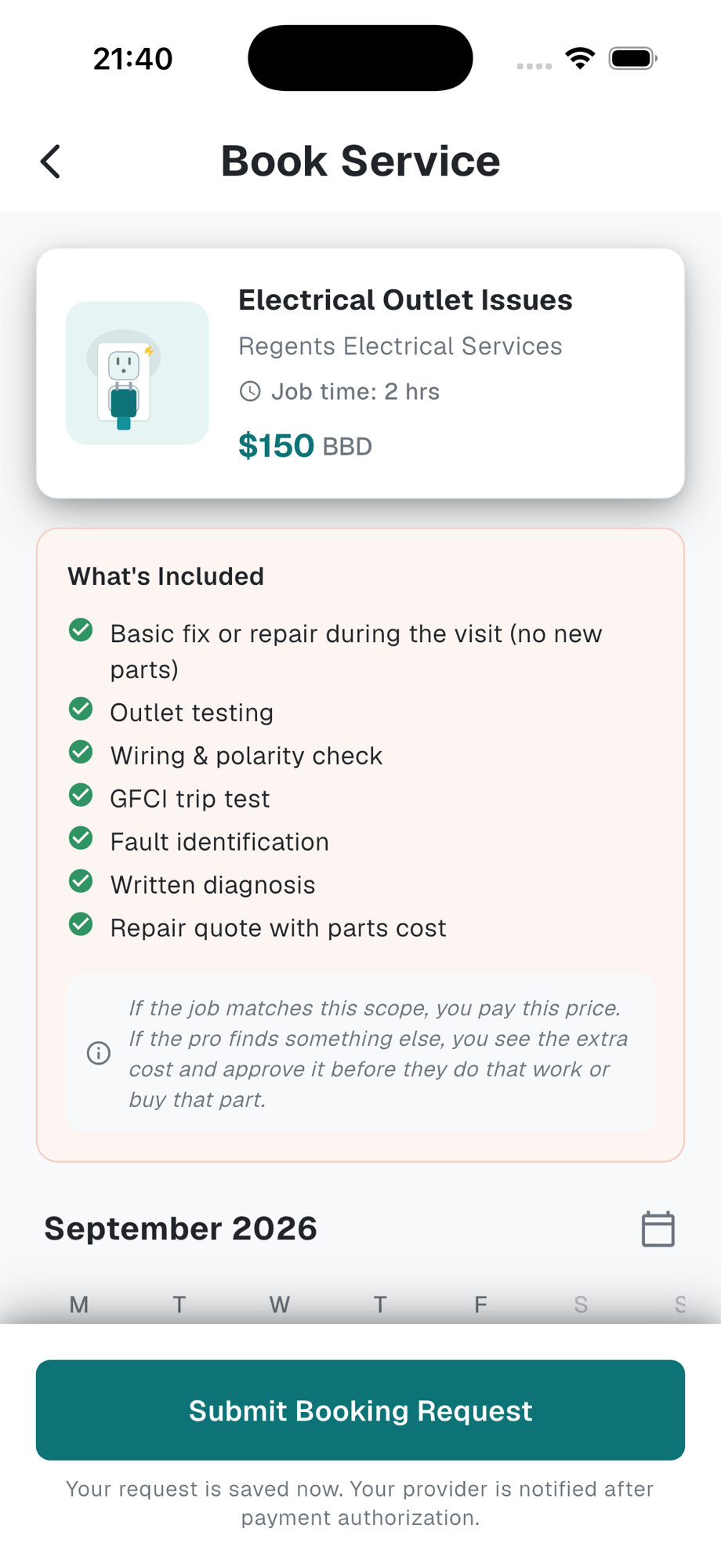
The footnote on that card:
If the job matches this scope, you pay this price. If the pro finds something else, you see the extra cost and approve it before they do that work or buy that part.
They test the outlet. The outlet was the symptom. The breaker is dead and has to be swapped. That swap arrives as a quote, with its own amount, for you to accept or decline. The Electrical Outlet Issues visit stays at the price you already booked.
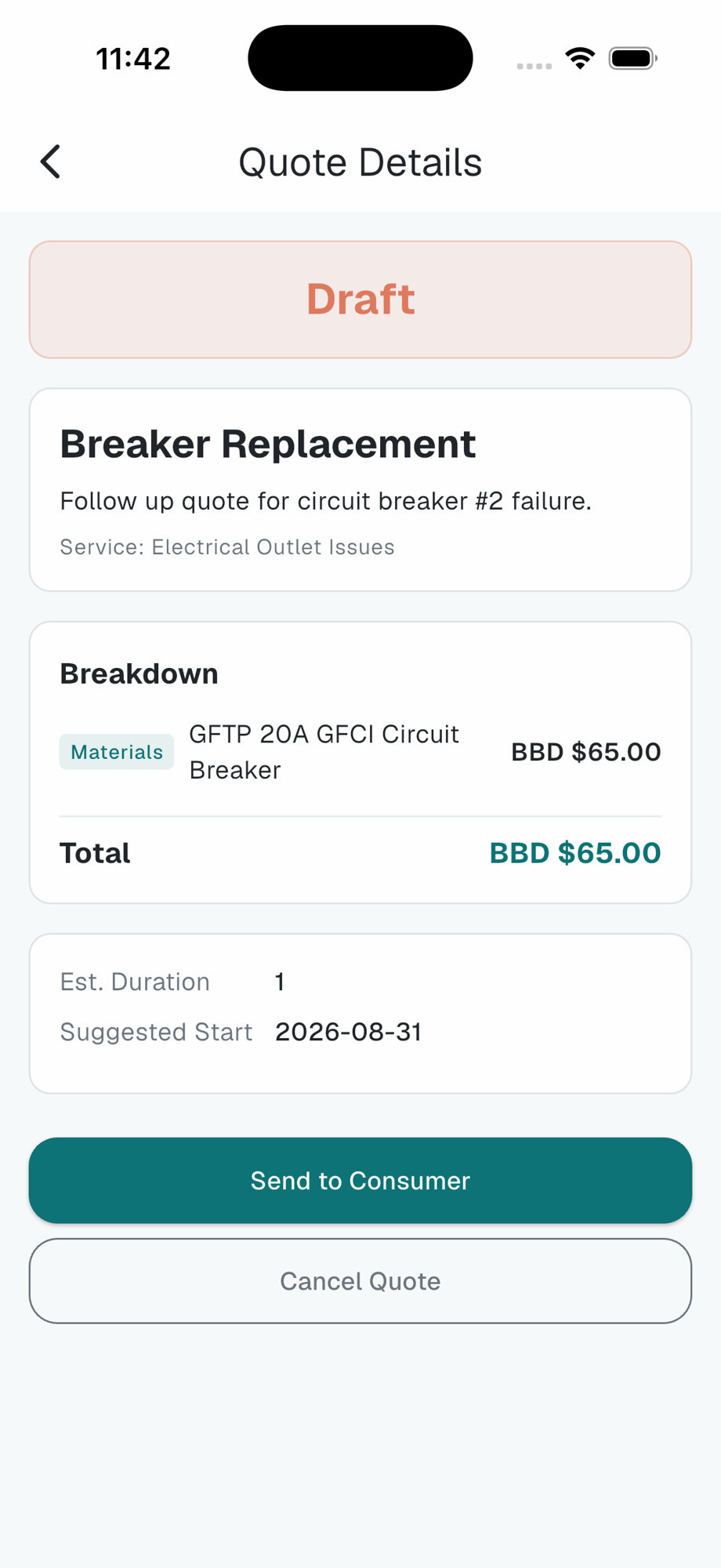
Taking the job
If you are the electrician: you accept Electrical Outlet Issues. Two hours. You test, you identify the fault, you fix it if the fix needs no new parts. You write a diagnosis. When the breaker is dead, you quote the swap.
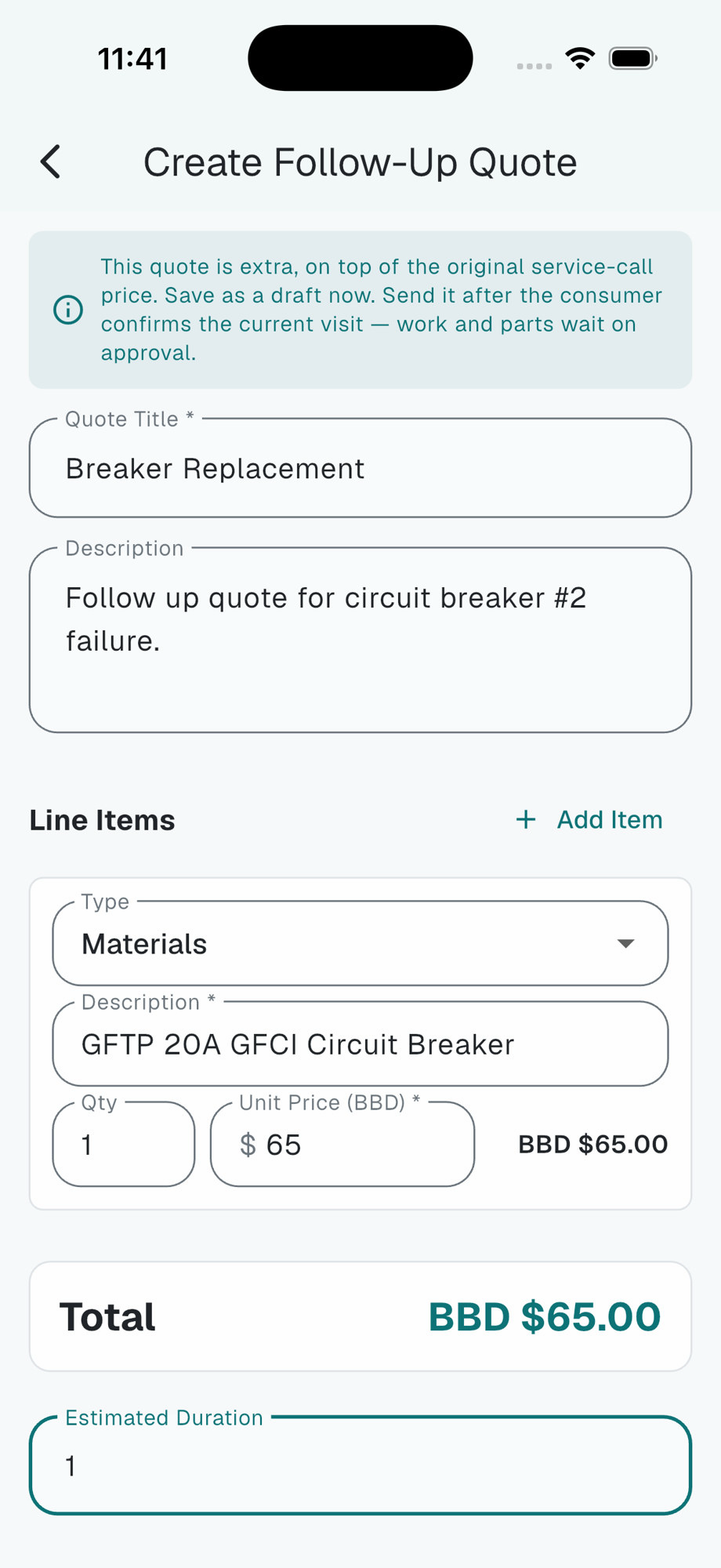
The customer sees that quote on their phone. They accept it or they decline it. The visit they already booked is already paid. You buy the breaker after they say yes.
Nexus is lining up plumbers, electricians and air conditioning technicians before customer bookings open.
Join the customer list if you want this kind of visit when we launch. Join the provider waitlist if you want to sell work this way.
How a visit runs, including the quote: how a service call works. See how Nexus works.